Is Annual Pressure Washing Enough in Myrtle Beach? Expert Advice From Advanced Power Wash
For many homes in Myrtle Beach, annual pressure washing is not enough to keep up with the algae, mold, and salt buildup that our coastal climate produces. The Grand Strand is beautiful, but it is also one of the harshest environments for exterior surfaces, and that means siding, driveways, patios, roofs, and walkways can collect grime much faster than homeowners expect. If you have ever searched for pressure washing in Myrtle Beach, SC after seeing green streaks on your siding or black mildew spreading across your driveway, you already know that this market is different from most inland areas.
The short answer is that annual service may work for some properties, but many homes need pressure washing more often to stay ahead of coastal wear. The right schedule depends on your home’s location, shade, sun exposure, landscaping, and how close you live to the ocean. Homes that sit directly in the salt air often need more frequent care, while properties farther inland may be able to stretch service intervals a bit longer.
Why Myrtle Beach Homes Need More Frequent Cleaning
Coastal air changes the cleaning schedule
Myrtle Beach homes are exposed to a constant mix of salt, humidity, windblown sand, and moisture. That combination creates ideal conditions for algae and mildew to grow quickly on siding, concrete, fencing, and roofing. Unlike drier climates, where surfaces can stay clean for months, coastal properties often show buildup soon after a professional wash.
Organic growth appears fast
Green algae on vinyl siding or black mildew on shaded concrete does not take long to spread. Once moisture and shade are present, buildup can return in a matter of weeks or months. That is why a generic once-a-year pressure washing plan often falls short for homes in this area.
Salt residue causes long-term wear
Salt does more than make surfaces look dirty. It clings to exterior materials and holds moisture against them, which can speed up staining, fading, and deterioration. Over time, that can reduce the lifespan of siding, shingles, trim, and even concrete surfaces.
What Annual Pressure Washing Can and Cannot Do
When once-a-year service is enough
Some homes do well with annual pressure washing, especially if they are farther from the ocean, receive strong sun exposure, and do not have a lot of tree cover. These homes usually dry out faster and collect less organic buildup throughout the year. In those cases, a yearly visit may be enough to preserve curb appeal and keep algae under control.
When annual service is not enough
Shaded homes, oceanfront properties, homes under trees, and properties with north-facing surfaces usually need more frequent pressure washing. Those areas stay damp longer, which gives mold and algae more time to grow. Driveways and walkways that see frequent moisture may also need cleaning more than once a year for both appearance and safety.
What happens if you wait too long
If pressure washing is delayed too long, buildup becomes harder to remove and may begin causing surface damage. Siding can stain permanently, concrete can darken, and roofing can collect growth that reduces its lifespan. A cleaning schedule that reacts too late usually costs more in the long run than a preventive maintenance plan.
How Sun Exposure and Shade Affect Your Home
Full sun surfaces stay cleaner longer
Areas that get direct sunlight usually dry faster after rain and humidity. That makes it harder for algae and mildew to take hold. Homes with open exposure often need less frequent pressure washing than homes that sit in heavy shade.
Shaded areas grow grime faster
North-facing walls, covered porches, soffits, and areas blocked by trees or neighboring structures tend to stay damp. Those damp surfaces become ideal places for algae, mildew, and mold to spread. In Myrtle Beach, these shaded zones often need cleaning before the rest of the house does.
Landscaping can make a difference
Large shrubs, trees, and dense plant beds can trap moisture close to the house. They also reduce airflow, which slows drying and encourages buildup. A property with heavy landscaping may need more frequent pressure washing than a more open lot.
Different Surfaces Need Different Attention
Siding
Vinyl and fiber cement
These surfaces collect algae quickly in coastal climates. For many Myrtle Beach homes, siding benefits from pressure washing or soft washing every 6 to 12 months depending on shade and exposure.
Painted surfaces
Painted siding and trim need careful treatment so the finish is not damaged. Professional washing helps remove dirt, mildew, and salt without stripping the paint.
Driveways and walkways
Concrete and pavers
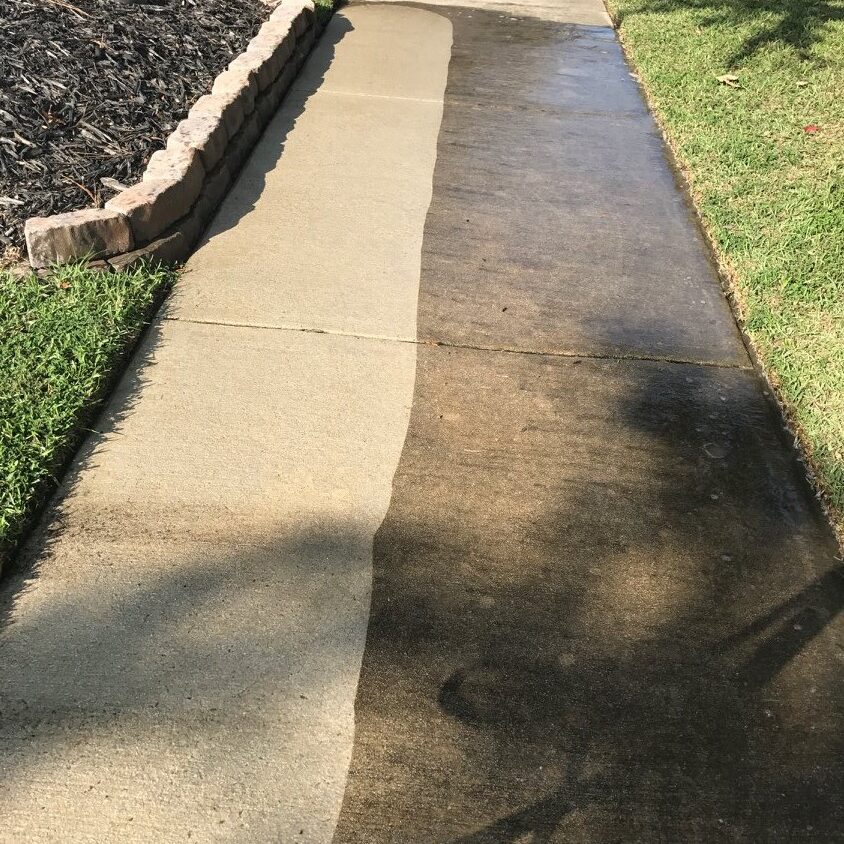
These surfaces often show tire marks, mildew, rust stains, and salt residue. Because they are high-traffic and constantly exposed, driveway pressure washing may be needed more often than once per year.
Safety concerns
Slippery buildup on concrete and pavers can create fall hazards, especially after rain. That means these areas are not just cosmetic concerns; they are safety concerns too.
Roofs
Roofs need a different method
Roofs should not be treated like driveways or sidewalks. Roof cleaning usually requires soft washing, not standard high-pressure cleaning, because shingles and roof coatings can be damaged by forceful water.
Roof growth is common in Myrtle Beach
Black streaks, moss, and mildew show up quickly in the coastal environment. Roof maintenance should be scheduled based on visible growth and roof type, not just a fixed once-a-year rule.
The Best Pressure Washing Schedule for Myrtle Beach Homes
Oceanfront homes
Homes closest to the ocean often need pressure washing every 3 to 6 months for key exterior areas. Salt exposure is strongest there, and buildup returns quickly.
Homes near the beach
Properties in beach neighborhoods usually benefit from service every 6 to 9 months. These homes may not need the most aggressive schedule, but they still need more than a single annual wash in most cases.
Inland Grand Strand homes
Homes farther from the coast may be able to stick closer to annual pressure washing, especially if they get good sunlight and have limited shade. Even so, many of these properties still need spot cleaning or partial service in between full visits.
High-shade properties
Homes surrounded by trees, with north-facing walls, or with heavy moisture retention often need more frequent service regardless of location. In these cases, pressure washing every 6 months is often more realistic.
Why Professional Scheduling Works Better Than a Generic Plan
A property-specific approach matters
A one-size-fits-all schedule rarely works in Myrtle Beach. Two homes on the same street can age very differently depending on shade, roof pitch, salt exposure, and surrounding landscaping. A customized cleaning plan usually gives better results and better value.
Preventive care reduces damage
Pressure washing before buildup becomes severe helps protect materials over time. That means fewer stains, less corrosion, and a better-looking exterior year-round.
Maintenance is cheaper than restoration
It is almost always less expensive to wash a home regularly than to restore a neglected one. Stained siding, dark concrete, and biological growth on roofs often require more labor and specialized cleaning when they have been ignored too long.
Pressure Washing vs. Soft Washing
Why the method matters
Pressure washing and soft washing are not interchangeable. Pressure washing is ideal for hard surfaces like concrete, while soft washing is better for delicate materials like roofs and many types of siding. Using the wrong method can cause damage, so the service should always match the surface.
Soft washing for sensitive areas
Roofs, painted finishes, and some siding materials benefit from lower-pressure cleaning with biodegradable solutions. This removes algae and mildew without stripping material or forcing water where it should not go.
Pressure washing for hard surfaces
Driveways, sidewalks, retaining walls, and patios usually benefit from stronger cleaning. These surfaces can handle higher pressure and often need it to remove embedded grime.
What Advanced Power Wash Recommends
Use your property as the guide
Advanced Power Wash recommends building your schedule around the actual condition of the property rather than relying only on the calendar. The right frequency depends on shade, salt exposure, tree cover, and how quickly buildup returns after cleaning.
Watch for early warning signs
If you start seeing green streaks, black mildew, slippery concrete, or salt haze returning quickly, it is time to shorten the interval between cleanings. Those early signs are often the best signal that annual service is not enough.
Get a free estimate
A professional inspection helps determine whether your property needs annual service, semiannual service, or something in between. Free estimates make it easier to choose a schedule that fits your home instead of guessing.
How to Decide What Your Home Needs
Ask these questions
-
Does the home sit close to the ocean?
-
Are there shaded walls or heavily landscaped areas?
-
Do you see algae returning within a few months?
-
Are walkways or driveways becoming slippery?
-
Has the roof developed black streaks or moss?
If the answer to several of those questions is yes, your home likely needs pressure washing more often than once a year.
Match the schedule to the environment
The best maintenance plan is the one that reflects your home’s actual conditions. In Myrtle Beach, that usually means being more proactive than homeowners in inland markets.
Final Takeaway
Annual pressure washing may be enough for some Myrtle Beach homes, but for many coastal properties it is simply not frequent enough. Salt air, humidity, shade, and organic growth combine to create faster buildup than most homeowners expect. A property-specific schedule usually protects the home better, looks better, and saves money over time.
Advanced Power Wash helps homeowners throughout Myrtle Beach choose the right cleaning frequency based on real conditions, not guesswork. If your siding, driveway, roof, or walkways are already showing signs of fast buildup, a professional evaluation is the best next step.